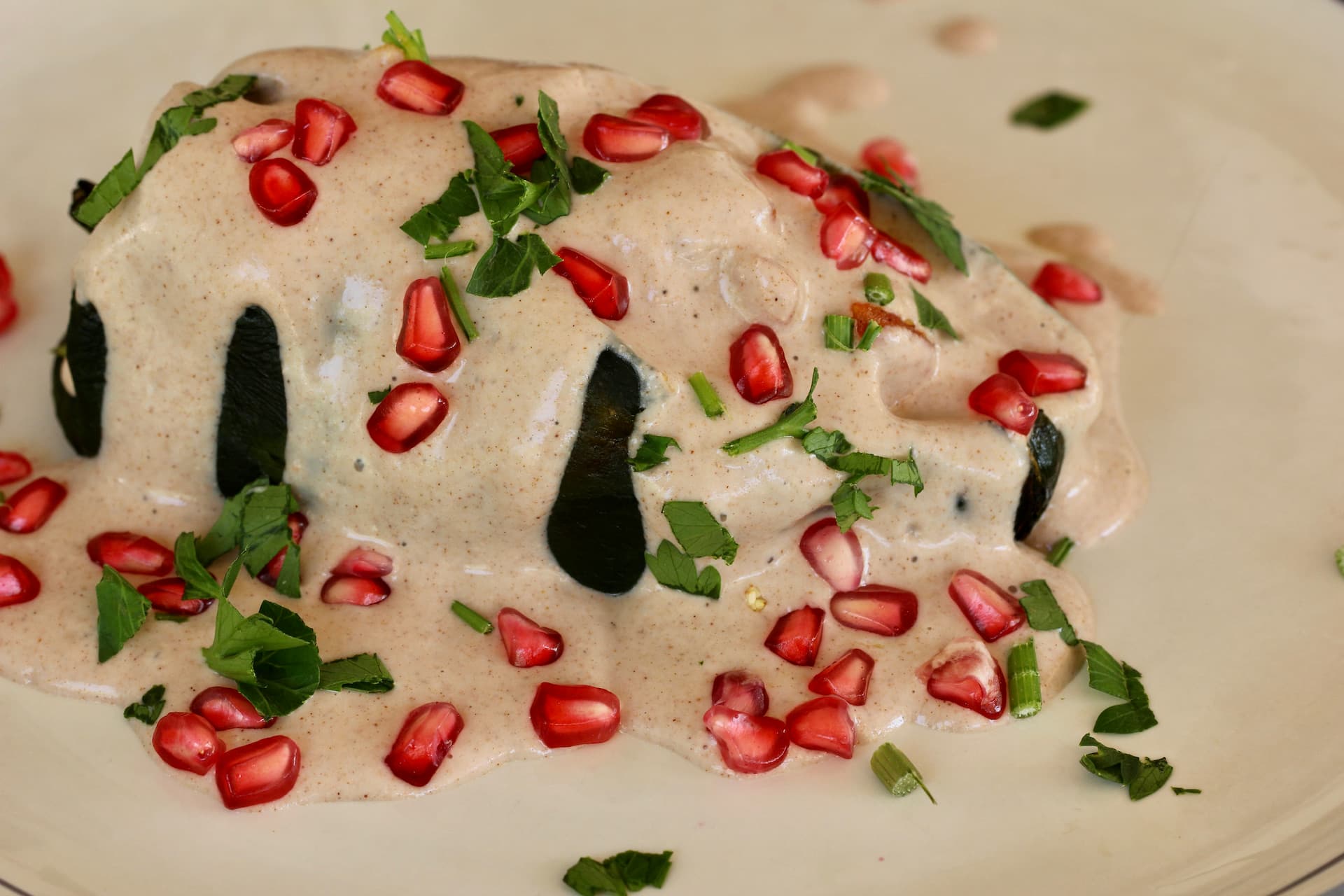
Chiles en Nogada
This is a complex recipe traditionally prepared on Independence Day in Mexico. During a detox and cooking retreat, I discovered the profound artistry of Mexican cuisine and learned to prepare one of Mexico's most exquisite dishes: Chiles en Nogada. This sophisticated creation features poblano peppers—a mild chile originating in Puebla, Mexico—stuffed with a harmonious blend of seasonal peaches, sweet plantains, apples, raisins, and a creamy mixture of pecans and almonds. Imagine the incredible symphony of flavors that unfolds with each bite.
The poblano pepper, one of old Mexico's most beloved chiles, grows on multi-stemmed plants that can reach up to 64 cm (25 inches) in height. The pods themselves measure about 7.5 to 15 cm (3 to 6 inches) in length and 5 to 7.5 cm (2 to 3 inches) in width. Young, immature poblanos display a dark green or purplish green hue, eventually transforming into a deep red that approaches dark brown or black. Walking through the markets of Puebla, the rich colors and remarkable variety of chiles create an incredibly impressive display.
In Mexico, chiles are prepared in countless ways: dried for preservation, coated in whipped egg and fried for texture, stuffed with aromatic fillings, or incorporated into the spectacular "mole" sauces that define Mexican gastronomy. Poblano chiles hold special significance during Mexican Independence festivities in mid-September, as they feature prominently in the sophisticated dish Chiles en Nogada. Representing the colors of the Mexican flag—red, white, and green—this dish stands as one of Mexico's most symbolic national recipes.
The preparation begins with roasting the chile over an open flame and carefully peeling away its waxy skin, which enhances both texture and flavor. When properly stored in airtight containers, poblanos can be preserved for several months. Once dried, the pepper transforms into a flat, broad, heart-shaped pod called an Ancho chile—a common dried variety often ground into flavorful powder. Poblano chiles are relatively mild, registering between 1,000 to 2,000 Scoville Units, making them accessible to most palates while still providing gentle warmth.
Comments
Sign in to leave a comment